Please see here for the paper.
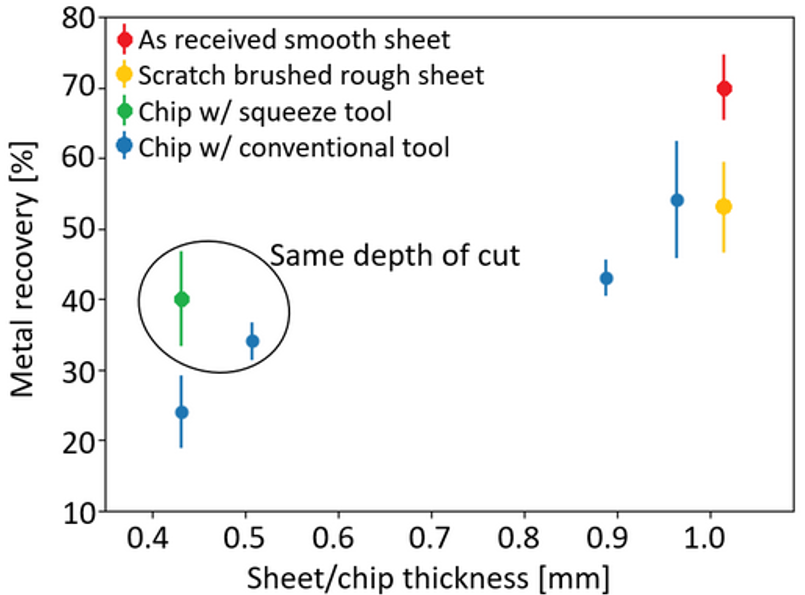
In this work, we use an electric muffle furnace to remelt clean aluminum sheet and machining chip process scrap of varying thickness, surface roughness, and composition. The results show that magnesium-containing alloys accelerate dross generation and lower metal recovery. Metal recovery decreased when remelting thinner scrap. Metal recovery for clean machining chips was lower than for aluminum sheet scrap of the same thickness and composition. This disparity was likely due to the greater surface roughness of the machining chips, which will increase the surface area for oxidation and potentially the wetting of the oxide by the Wenzel effect. The decreased metal recovery for scratch brushed aluminum sheets confirmed the effect of surface roughness. Subsequently, a “squeeze” cutting tool was designed and manufactured for use on a lathe, which smooths the otherwise rough back-side of the chips. These smoother machining chips exhibited increased metal recovery during remelting. Furthermore, we show the potential to make "squeeze" cutting end mills for use on a mill.

Scratch brushing reduces the metal recovery in all cases. For example, for AA6061 sheets, scratch brushing reduces the mean metal recovery from 70% to 53%, which is close to the recovery on remelting of AA6061 machining chips of the same thickness. The reduction in metal recovery is likely attributable to the increase in the real surface area available for oxidation. In addition, it is known that entrapment and wetting of the liquid aluminum on the solid oxide increases dross generation. Increased surface roughness may increase entrapment by increasing the wetting via the Wenzel effect .
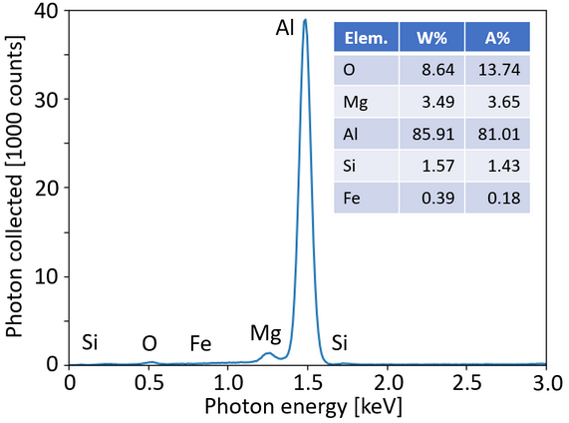
The lowest metal recovery rates were for those alloys containing significant quantities of magnesium, due to the increased reactivity of magnesium compared to aluminum. A chemical analysis (Energy-dispersive X-ray spectroscopy) was conducted on multiple dross samples from remelting of the AA6061 sheets in order to determine dross composition. A typical result generated using default ZAF settings shows a higher magnesium content was detected in the dross than is present in the original alloy, suggesting accelerated oxidation of the magnesium content. Disproportionate metal loss of key, energy-intensive alloying elements such as magnesium is a concern considering the energy intensity and cost of their production.

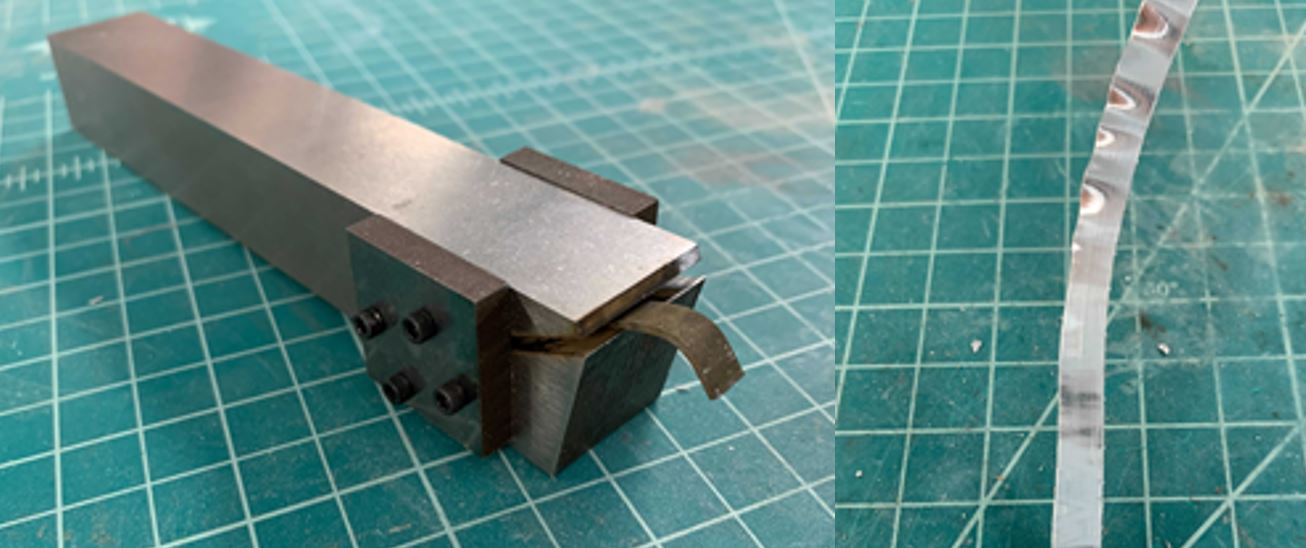
Machining chips are widely known to be difficult to recycle and metal nrecovery rtes are low unless meltvories and fluxes are used. Could a new machining tool produce smoother machining chips that exhibit increased metalnrecovery on melting? A new "squeeze" cutting tool was designed for a lathe that squeezes and smooths the otherwise rough back-side of the chip.
The squeeze cutting tool contains a restraining tool that smooths the back-side of the machining chips. The resulting machining chips appear shiny on both sides and exhibit increased metal recovery on subsequent melting.
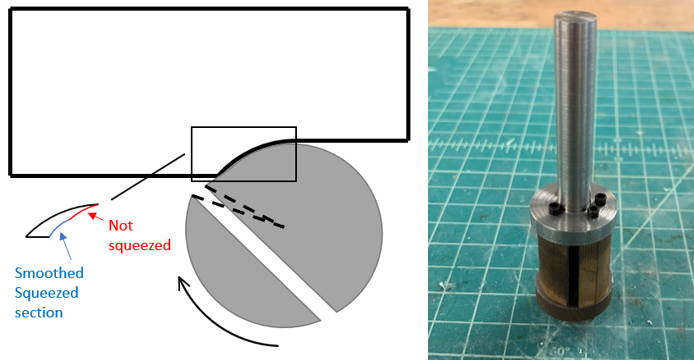
An end mill variant of the "squeeze" cutting tool was also built and demonstarted that squeezes the front portion of each machining chip created (see video below).
